
Air Fryer Buying Guide: 10 Smart Tips
Choosing an air fryer can feel confusing with so many sizes, features, and designs available. This Air fryer buying guide explains ten important things to consider before buying, helping you select a model that suits your cooking habits, kitchen space, and budget.
An air fryer buying guide should start with your everyday needs, not the longest feature list. Air fryers circulate hot air to cook and brown food, often using less oil than deep frying. However, results vary by recipe, food quantity, and appliance design. Consider these ten points before choosing a model.
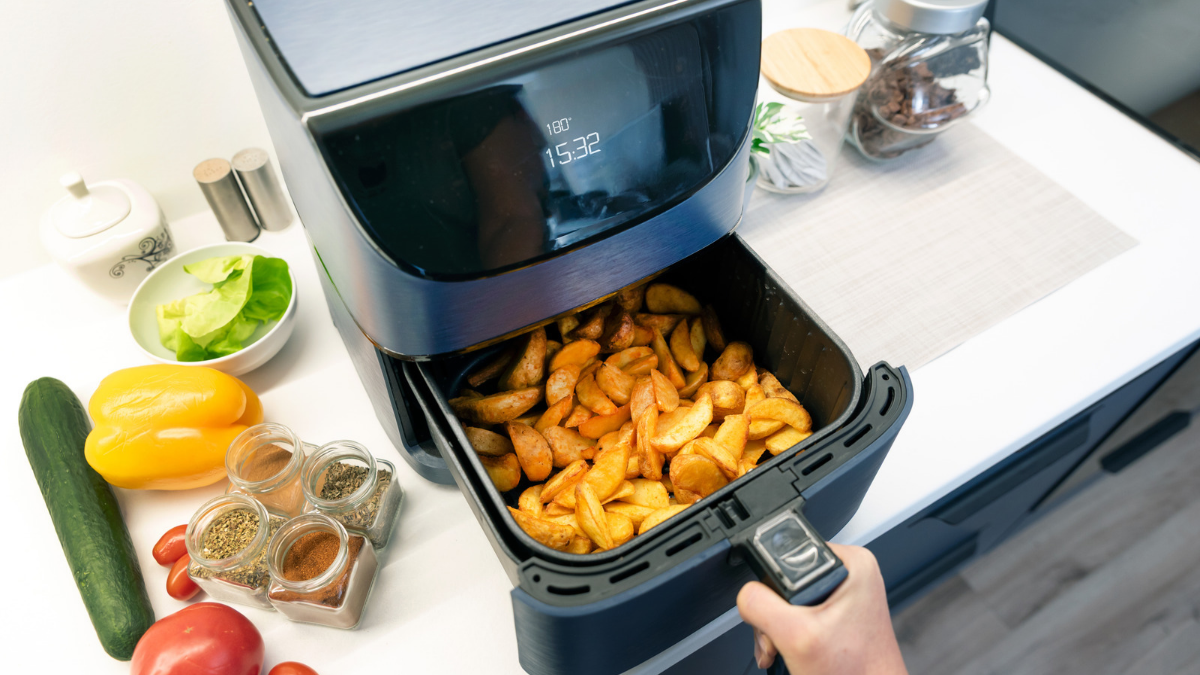
1. Choose the Right Air Fryer Capacity
Capacity is one of the most important decisions because a small basket may require multiple batches, while an oversized unit can take up valuable counter space. Think about how many people you usually cook for and whether you prepare snacks, side dishes, or full meals.
- Individuals and couples: a compact model may work well for snacks and modest portions.
- Families: consider a larger basket or dual-basket model if you often cook several portions at once.
- Batch cooking: look for a roomy cooking area and check usable basket dimensions, not only the advertised litre or quart capacity.
Remember that a basket should not be packed tightly. Air needs space to circulate, and some foods need shaking or turning for even browning.
2. Pick the Right Air Fryer Type – Air fryer buying guide
Basket-Style Air Fryer
A practical choice for fries, vegetables, frozen snacks, and smaller batches. Its drawer or basket is generally straightforward to use.
- Often compact and easy to operate
- Good for quick portions
- Check basket shape and capacity
Oven-Style Air Fryer (Air fryer buying guide)
Usually offers shelves or trays, which can be helpful for toast, reheating, or cooking different foods. It may need more counter space.
- Can accommodate flatter foods
- May include extra cooking modes
- Check tray access and cleaning effort
Dual-basket models are another option when you want to cook two foods separately. Compare the capacity of each basket and whether both zones can finish at the same time.
3. Measure Your Kitchen Space
Before ordering, measure the appliance footprint and the available height beneath cabinets. Leave the clearance recommended by the manufacturer for ventilation. An air fryer should sit on a stable, heat-resistant surface away from curtains, paper towels, and water. (Air Fryer buying guide)
If you plan to store it in a cupboard after each use, check the unit’s weight and whether the cord can be stored neatly. A model that is difficult to move may end up being used less often.
4. Check Wattage and Cooking Performance – Air fryer buying guide
Wattage can help you understand the appliance’s electrical requirements, but higher wattage alone does not guarantee better cooking. Heating design, airflow, basket shape, food quantity, and temperature consistency all influence results.
Look for clear instructions on preheating, shaking, turning, and cooking times. If independent reviews are available, compare consistency across different foods rather than relying only on advertised claims.
5. Look for Easy-to-Use Temperature and Timer Controls
Adjustable temperature and timer settings give you more control than a small set of fixed programs. Check the temperature range, how easy the controls are to read, and whether the timer is simple to adjust while cooking.
Digital touch panels can be convenient, while manual dials may suit people who prefer uncomplicated controls. Neither is automatically better; choose the style that feels easiest for you to use.
6. Evaluate Presets and Extra Cooking Functions – Air fryer buying guide
Preset buttons for foods such as fries, chicken, fish, or vegetables can make everyday cooking easier. Some appliances also offer roast, bake, reheat, dehydrate, or toast functions. Nevertheless, extra modes are useful only if you expect to use them.
- Choose presets that match the meals you make regularly.
- Check whether you can manually change time and temperature.
- Look for clear instructions and recipes from the manufacturer.
Treat presets as starting points and check food doneness using appropriate food-safety guidance.
7. Make Cleaning and Maintenance Easy
Cleaning is a major factor in whether an appliance remains part of your routine. Check whether the basket, tray, and accessories are removable and whether the manufacturer says they are dishwasher-safe. Do not assume every non-stick component can go in the dishwasher.
Look for smooth surfaces, accessible corners, and parts that are easy to dry. Avoid abrasive scrubbers or harsh cleaners unless the instructions specifically allow them, because these can damage coatings. Unplug the appliance and let it cool before cleaning.
8. Consider Noise and Everyday Convenience
Air fryers use a fan, so some operating noise is normal. If your kitchen is open to your living area, check user reviews for comments about fan noise and beeps. A viewing window or interior light can be handy, although it is not essential.
Also consider handle comfort, how smoothly the basket slides, whether the display is readable, and how easily you can remove food without spilling it. Small usability details can matter more than a long list of rarely used features.
9. Review Safety Features and Warranty
Check for stable construction, a secure handle, automatic shutoff where offered, and clear safety instructions. The outer surfaces and escaping air can become hot, so keep children away during operation and follow the required ventilation clearances.
Before buying, read the warranty terms and find out how service, replacement parts, and customer support work in your region. Confirm the seller’s return policy as well.
10. Compare Price and Overall Value
Set a budget, then compare appliances with similar capacity and functions. Include the cost of any accessories you genuinely need, as well as delivery, warranty coverage, and expected ease of maintenance. Avoid paying extra for features you are unlikely to use.
| What to Compare | Questions to Ask | Why It Matters |
|---|---|---|
| Capacity | Will it cook enough food in a practical number of batches? | Matches the appliance to your household. |
| Footprint | Will it fit with the required ventilation space? | Prevents counter and storage problems. |
| Controls | Are time and temperature easy to adjust? | Makes everyday cooking simpler. |
| Cleaning | Are removable parts easy to wash and maintain? | Can make frequent use more convenient. |
| Warranty and support | Can you get help and replacement parts locally? | Supports long-term ownership. |
Quick Air Fryer Buying Checklist
Before you place your order, use this short checklist to make a confident decision. (Air Fryer buying guide)
- Capacity suits your household and usual recipes.
- Dimensions fit your counter, cabinets, and storage space.
- Power and voltage requirements match your home.
- Temperature and timer controls are easy to use.
- Cooking presets and extra functions meet real needs.
- Removable parts are simple to clean according to the manual.
- Safety instructions, warranty, and support are clear.
- The price makes sense for the features you will use.
Frequently Asked Questions
Is a bigger air fryer always better?
Not necessarily. A larger model can handle bigger portions, but it also takes up more space. Choose capacity based on the amount of food you normally prepare and how much room your kitchen has.
Are air fryers healthier than deep frying?
Air frying can reduce the amount of oil used compared with deep frying. However, how nutritious a meal is depends on the ingredients, portions, and overall cooking method. An air fryer does not automatically make every food healthy.
What is more important: wattage or capacity?
Both matter, but neither tells the whole story. Capacity helps determine how much food you can cook, while wattage is one part of the appliance’s power requirements and performance. Consider design, controls, cleaning, and independent feedback together.
Can I put every air fryer basket in the dishwasher?
No. Dishwasher suitability depends on the model and its materials. Follow the manufacturer’s cleaning instructions to protect the basket coating and appliance components.
Final Thoughts: Choose an Air Fryer for Your Needs
The best air fryer is not necessarily the biggest or the one with the most presets. Choose a model that fits your household size, available space, cooking habits, cleaning preferences, and budget. Compare specifications carefully and use this air fryer buying guide as your final checklist before purchasing.
Product specifications and features vary by model and region. Confirm current specifications, safety instructions, warranty terms, and cleaning guidance with the manufacturer before purchase.