
Everyday cooking becomes easier when you have the right simple kitchen tools to handle common food preparation tasks. From peeling vegetables to measuring ingredients and mixing sauces, a few practical utensils can help you save effort and organize your cooking routine. Fortunately, you don’t need expensive gadgets or a cupboard full of equipment to make your kitchen more functional.
In this guide, we’ll explore five useful kitchen tools, explain how each one helps, and share practical tips for choosing and maintaining them. Whether you’re preparing quick weekday meals or trying new recipes, these kitchen essentials can be valuable additions to your home.
Table of Contents
- Vegetable Peeler
- Measuring Cups and Spoons
- Silicone Spatula
- Stainless Steel Whisk
- Kitchen Tongs
- How to Choose the Right Kitchen Tools
- Frequently Asked Questions
1. Vegetable Peeler: Prepare Vegetables More Easily
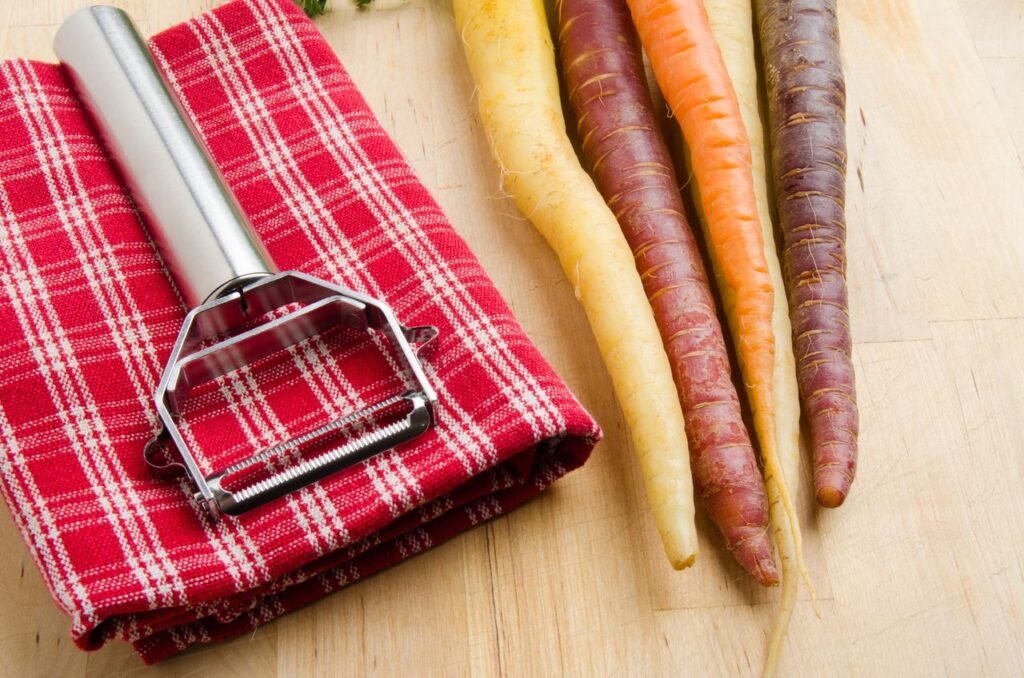
A vegetable peeler is one of the most practical utensils for everyday food preparation. It helps remove thin outer layers from vegetables and certain fruits, making ingredient preparation more convenient.
Benefits of using a vegetable peeler
- Quicker preparation: Peel potatoes, carrots, cucumbers, and other suitable produce.
- Less waste: A sharp blade can remove a thin layer of skin when used correctly.
- Convenient handling: Its compact design makes storage simple.
- Versatile use: Some peelers can create thin vegetable ribbons for salads and garnishes.
When choosing a peeler, look for a comfortable handle and a durable, sharp blade. A swivel-head design may also help you follow the contours of different vegetables.
Kitchen tip: Wash produce before peeling and direct the blade away from your fingers. Clean and store the peeler safely after use.
2. Measuring Cups and Spoons: Get Consistent Results
Measuring cups and spoons are particularly useful when following recipes. They help you measure ingredients consistently, especially when preparing baked goods, sauces, and dishes that require specific proportions.
Why measuring tools are useful
- Consistent quantities: Measure ingredients more reliably from one preparation to another.
- Better baking results: Follow measurements for flour, sugar, baking powder, and other ingredients.
- Convenient portioning: Measure small quantities of spices, oils, and flavorings.
- Easier recipe preparation: Follow unfamiliar recipes with greater confidence.
Stainless steel sets are popular for their durability, while suitable food-grade plastic sets offer a lightweight alternative. In either case, choose clearly marked measurements and a design that’s easy to clean.
Additionally, remember that dry and liquid measuring cups may be designed differently. For greater precision in baking, a kitchen scale can be helpful.
Kitchen tip: Check whether your recipe uses cups, tablespoons, teaspoons, milliliters, or grams before measuring.
3. Silicone Spatula: Mix and Scrape Conveniently
A silicone spatula is a versatile utensil for mixing ingredients, scraping bowls, folding batters, and spreading mixtures. Its flexible head helps reach the sides and corners of many containers.
Everyday uses for a silicone spatula
- Scraping bowls: Gather more of your mixture from the sides of a bowl.
- Mixing ingredients: Stir sauces, batters, and other preparations.
- Folding mixtures: Gently combine ingredients when a recipe calls for folding.
- Cooking and serving: Use a suitable spatula for compatible pans and food preparation tasks.
When shopping for one, consider a comfortable handle and a flexible head made from food-grade silicone. A one-piece design can also make cleaning easier because it has fewer joints where food may collect.
However, always check the manufacturer’s temperature guidance before using a spatula with hot cookware. If you have nonstick pans, choose a utensil that’s suitable for their surfaces.
Kitchen tip: Avoid leaving a spatula against a hot pan for extended periods, even when it’s designed for cooking.
4. Stainless Steel Whisk: Combine Ingredients Smoothly
A stainless steel whisk helps combine ingredients and incorporate air into mixtures. It’s useful for everyday tasks, including beating eggs, preparing salad dressings, and mixing sauces.
What can you prepare with a whisk?
- Eggs: Beat eggs for omelets and scrambled eggs.
- Sauces: Combine ingredients to help create a uniform consistency.
- Salad dressings: Mix oil, vinegar, and seasonings.
- Baking mixtures: Combine dry ingredients or prepare suitable batters.
A good whisk should have securely attached wires, a comfortable handle, and a size that suits your usual bowls. Smaller whisks work well for dressings and small quantities, whereas larger versions are convenient for bigger batches.
Furthermore, stainless steel is a popular choice because it’s durable and generally easy to clean. Nevertheless, use an appropriate non-scratch utensil when working with delicate cookware.
Kitchen tip: Keep a small whisk handy for quick dressings, sauces, and other small-batch preparations.
5. Kitchen Tongs: Turn and Serve Food With Ease
Kitchen tongs help grip, turn, and serve food without requiring direct hand contact. They’re especially useful when handling ingredients in a pan or transferring prepared food to a serving dish.
Reasons to keep kitchen tongs nearby
- Turning food: Flip suitable ingredients while cooking.
- Serving meals: Transfer pasta, vegetables, and other foods.
- Better control: Grip items that may be awkward to handle with a spoon.
- Multiple uses: Choose suitable tongs for cooking, grilling, or serving.
When selecting tongs, look for a secure grip, a comfortable locking mechanism if included, and a length appropriate for your cooking tasks.
Stainless steel tongs are sturdy, while silicone-tipped models can be useful for compatible nonstick cookware. In either case, check the manufacturer’s heat-resistance guidance.
Kitchen tip: Use clean utensils for ready-to-eat food and keep raw meat separate from cooked food to reduce the risk of cross-contamination.
For additional food handling and storage advice, consult the official FoodSafety.gov food safety guide.
How to Choose the Right Kitchen Tools for Your Home
The best kitchen utensils are those you’ll actually use. Before buying new equipment, consider your cooking habits, available storage, and budget.
1. Match Tools to Your Cooking Habits
If you prepare vegetables frequently, a peeler may be a useful starting point. Similarly, measuring cups and spoons can be particularly valuable if you regularly bake or follow recipes.
2. Prioritize Comfort and Safety
Choose tools with comfortable handles, secure construction, and materials suited to their intended purpose. They should be easy to grip, clean, and store safely.
3. Check Cleaning Requirements
Kitchen tools that are easy to clean can simplify your routine. However, check the manufacturer’s instructions to determine whether a utensil is dishwasher-safe or requires handwashing.
4. Consider Your Storage Space
Compact utensils are useful in smaller kitchens. Choose tools that fit comfortably in your drawers, utensil holders, or existing storage areas.
5. Compare Quality and Value
An expensive utensil isn’t automatically the best option. Compare materials, construction, comfort, durability, and cleaning requirements before making a purchase.
Additionally, consider how often you’ll use each item. Buying a few useful essentials is often more practical than purchasing a large set of gadgets you rarely need.
Frequently Asked Questions
1. What are the most useful kitchen tools for beginners?
A vegetable peeler, measuring cups and spoons, silicone spatula, stainless steel whisk, and kitchen tongs are useful starting points. Choose the tools that best match the meals you prepare regularly.
2. Are expensive kitchen utensils always better?
No. Price alone doesn’t determine quality. Consider durability, comfortable handling, appropriate materials, ease of cleaning, and suitability for your cooking needs.
3. Are silicone spatulas suitable for everyday cooking?
Food-grade silicone spatulas designed for cooking can be suitable for everyday use when handled according to the manufacturer’s temperature and care instructions.
4. Why are measuring cups and spoons important?
They help measure ingredients consistently and make it easier to follow recipes. Accurate measurements are particularly useful when baking.
5. How should I maintain my kitchen tools?
Clean utensils after use, follow the manufacturer’s care instructions, dry them when appropriate, and store sharp or pointed tools safely. Replace damaged items that are cracked, loose, or difficult to clean.
6. Do I need all five kitchen tools?
Not necessarily. Start with the utensils that support your regular cooking tasks. You can add other tools as your needs change.
Conclusion
You don’t need dozens of gadgets to make everyday cooking more manageable. A vegetable peeler, measuring cups and spoons, silicone spatula, stainless steel whisk, and kitchen tongs can help with many common food preparation tasks.
Ultimately, the goal is to choose practical tools that suit your cooking habits, storage space, and budget. Start with the essentials, use them regularly, and expand your collection only when you need something more.
For more practical kitchen advice, cooking tips, and ideas for a better-organized home kitchen, keep exploring FRESH BUILT KITCHEN.
Also read,